Future Engineer’s Vision for Transparent Solar Panels Powers Success in A Levels
Posted: 14th August 2026
Future Engineer’s Vision for Transparent Solar Panels Powers Success in A Levels
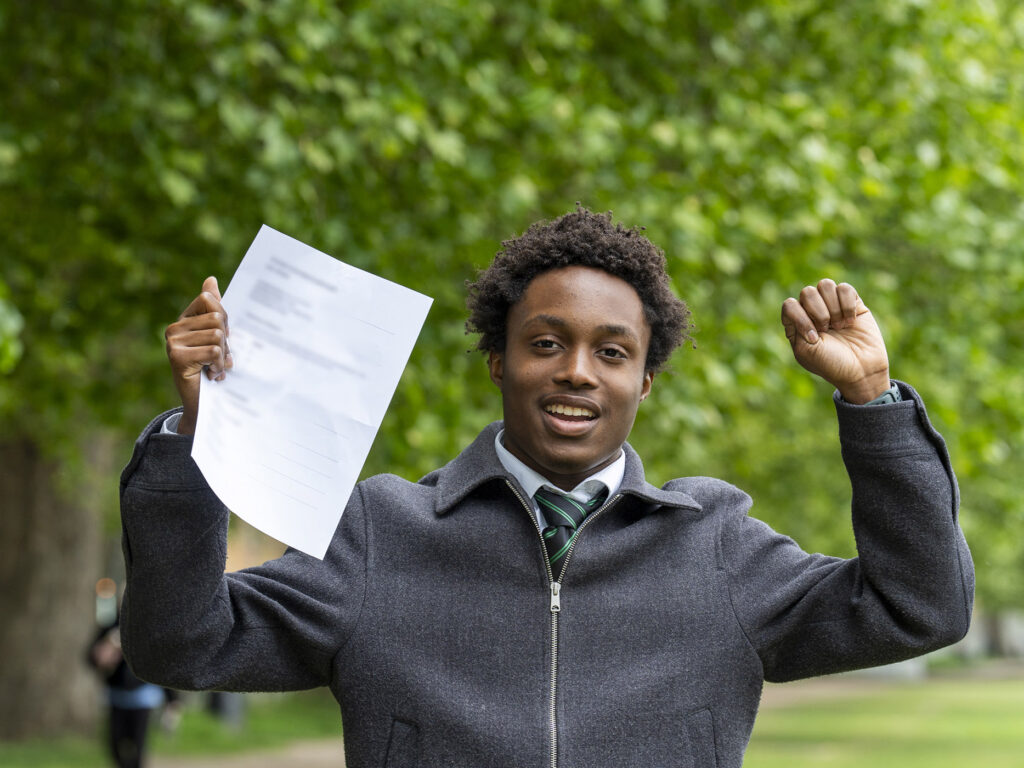
A Cardiff Sixth Form College student from Nigeria is celebrating his A Level results today after combining academic excellence with innovative engineering projects focused on renewable energy and robotics.
Diekola Raimi, originally from Lagos, Nigeria, has secured a place at the University of Bath to study Electrical and Electronic Engineering following receiving his A level results today in Mathematics (A*), Further Mathematics (A), Chemistry (A) and Physics (B).
Passionate about technology and innovation, Diekola chose engineering because he believes the future will be shaped by advances in technology, artificial intelligence and sustainable energy.
“Engineering is at the centre of solving many of the world’s biggest challenges,” he said. “Technology, computer science and AI are becoming increasingly important, and I wanted to be involved in creating solutions that can make a real difference.”
A key highlight of Diekola’s time at Cardiff Sixth Form College was his Extended Project Qualification (EPQ), which explored the potential development of transparent solar panels that could one day transform windows, roofs and buildings into sources of renewable energy.
The project examined emerging technologies designed to generate electricity while maintaining transparency, offering a more aesthetically appealing alternative to conventional solar panels.
“I was interested in whether solar panels could become something that people barely notice,” said Diekola. “Imagine office buildings, homes and skyscrapers where the windows themselves generate electricity. It has huge potential.”
Through extensive research into current developments and scientific literature, Diekola investigated the practicality and efficiency of transparent photovoltaic technologies. While his findings suggested that the concept remains some way from widespread commercial production, he concluded that continued research could unlock significant opportunities for renewable energy generation in the future.
“The technology is promising, but there are still challenges around manufacturing and efficiency,” he explained. “My conclusion was that it needs further development before it becomes commercially viable, but it could play an important role in the future of sustainable energy.”
Alongside his academic studies, Diekola has developed a strong interest in robotics and engineering design through his involvement in the College’s Robotics Club and the internationally recognised FIRST Tech Challenge competition.
As one of the student leaders within the team, he helped organise meetings and contributed to the design and construction of a robot capable of launching balls during competition challenges. The team also benefited from mentorship provided by engineers from ARM, one of the world’s leading semiconductor and computer technology companies.
“Visiting ARM’s headquarters was an incredible experience,” said Diekola. “It gave us opportunities to network with professionals working in the industry and learn about the engineering design process. Their advice helped us improve our ideas and manufacturing techniques.”
One of Diekola’s most ambitious projects was the creation of a robotic arm that mirrors the movements of a human hand. Working alongside a fellow student and supported by the College’s Head of Physics, he spent three months designing and building the device.
The team used 3D printing technology to create the arm’s structure before integrating motors, wiring, sensors and an Arduino microcontroller. A flex sensor embedded within a glove allowed the robotic hand to replicate the wearer’s movements in real time.
“When you bend your fingers, the robotic hand copies those movements,” Diekola explained. “The idea is that it could eventually be used in environments that are too dangerous for people, allowing tasks to be completed remotely.”
The project also provided valuable practical experience, with Diekola learning technical skills including soldering, drilling and electronics assembly using the College’s engineering facilities.
His achievements extend beyond engineering. Diekola earned Gold Awards in both the British Physics Olympiad and the Senior Mathematics Challenge, reached the finals of the Ritangle Challenge, received a Merit in the UK Bebras Computational Thinking Competition, and achieved a Merit in the final stages of the North Eastern Essay Competition for an economics-related essay.
Away from the classroom, he is a keen footballer and represents the College in fixtures against other schools. He has also contributed to community events, including Africa Day celebrations, where he prepared traditional Jollof rice for fellow students and staff.
Looking ahead, Diekola hopes to pursue a career developing technologies that contribute to a more sustainable future.
“My ambition is to create something that helps the world through renewable energy,” he said. “Whether that’s improving solar panels or developing another clean technology, I want my work to have a positive impact.”
Said Cardiff Sixth Form College Principal, Dr Julian Davies: “With his outstanding academic achievements, passion for innovation and a commitment to solving real-world challenges, Diekola is well placed to make his mark on the next generation of engineering breakthroughs. I look forward to seeing him develop his solar panels and robotic arm and there is no doubt he is likely to be extremely successful in the future.”